SMB Leaders: 12 Answers to Digital Queue Objections
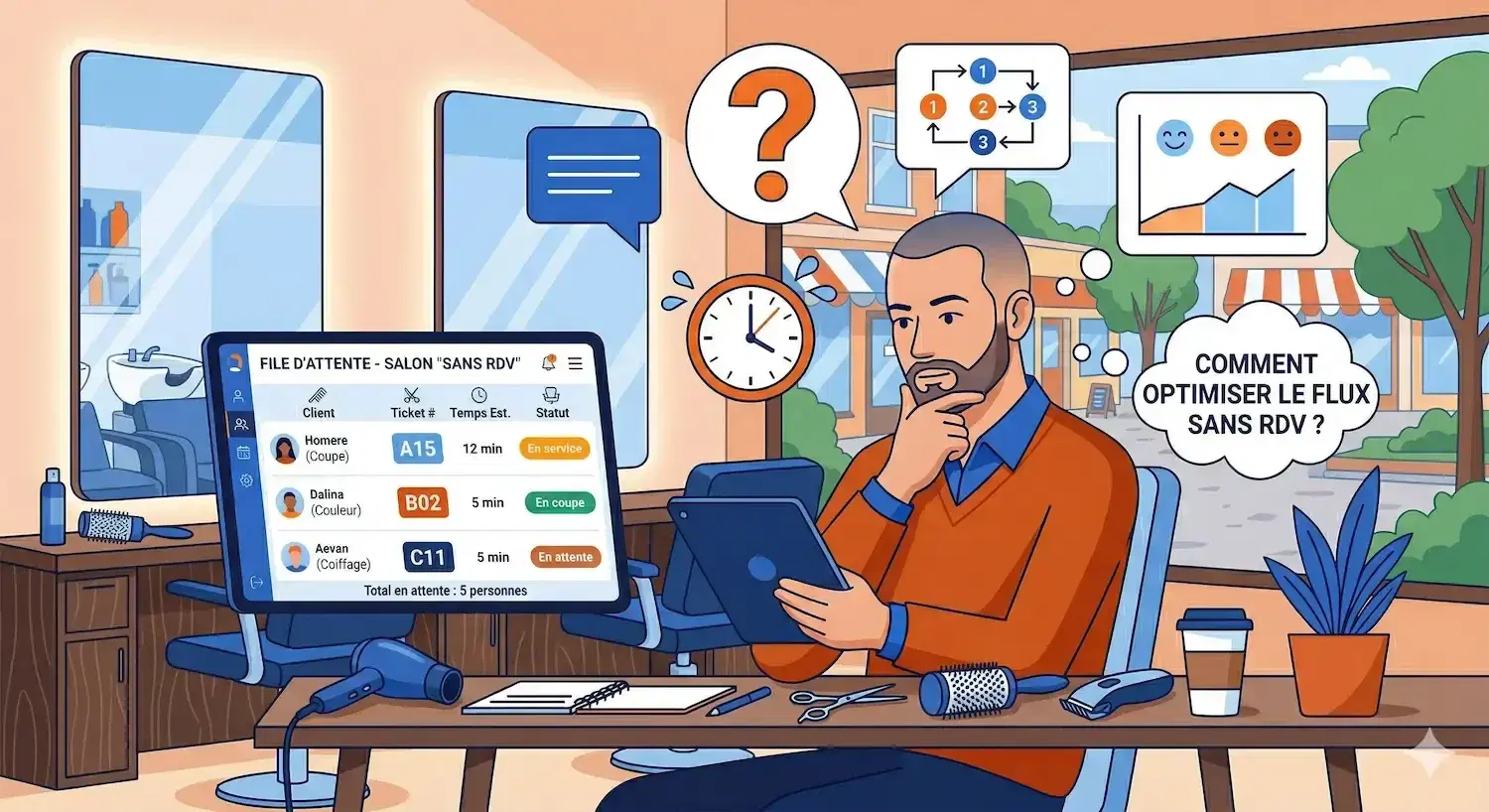
Why SMB Leaders Hesitate When Facing Queue Digitalization
Small and Medium Business (SMB) leaders face a pretty vicious paradox: customers increasingly expect digital convenience, yet many drag their feet when it comes to adopting virtual queue management solutions. This hesitation stems from legitimate concerns: budget constraints, fear of technical complexity, worry about alienating their customer base.
This article provides concrete answers to the 12 most common objections SMB leaders have about implementing digital queue management. Each response is backed by verified data and offers practical actions to overcome these barriers.
The reality: 75% of consumers consider wait time the most frustrating part of their customer experience (Forrester Research). Digitalization is no longer a luxury for large corporations. It's become a competitive necessity for any business managing customer flow.
The businesses that adapt early gain operational efficiency and customer satisfaction advantages. Those who wait risk losing clients to more agile competitors who understand that modern customers value their time above all else.
The Evolution of SMB-Technology Relationship: From Resistance to Adoption
Historically, SMBs have adopted technologies 10-15 years behind large enterprises. Electronic payment processing, online appointment booking, and now digital queue management follow this predictable cycle.
Pre-2020: Queue management remained analog in 90% of SMBs. Paper appointment books, "first come, first served" policies, rough time estimates based on experience rather than data. Basically, the stone age.
Post-COVID-19: Forced digitalization acceleration changed everything. Customers became comfortable with QR codes, SMS notifications, mobile apps. The acceptable wait time before frustration dropped to about 2 minutes in retail (Journal of Service Research). Autant dire que patience has evaporated.
Today: SMB leaders can no longer ignore this evolution. A customer who waits more than 5 minutes without information is 2× more likely to leave (Harvard Business Review). The question isn't "should we digitalize?" but "how do we do it effectively within budget constraints?"
The shift to digital becomes a survival factor. SMBs that adapt gain operational efficiency and customer satisfaction. Those that don't risk obsolescence.
4 Categories of Objections Analyzed with Data
Financial Objections: "It's Too Expensive for My Business"
SMB leaders systematically cite cost as the primary barrier. Reality check: a SaaS queue management solution costs less than a part-time employee ($200-400/month vs $1,200/month minimum). ROI calculation is straightforward:
- Time saved per employee: 2-3 hours/day of manual queue management
- Additional customers served: +15-20% capacity without hiring
- Reduced abandonment: long queues cause 10-15% cart abandonment in retail (Adyen study)
For a 40-seat restaurant, the math is clear: 3 lost customers per service × $30 average ticket × 25 services/month = $2,250 monthly revenue loss. Technology investment pays for itself in 2-3 months. Bottom line: you lose more money doing nothing.
Technical Objections: "It's Too Complicated to Manage"
Fear of technical complexity deters 60% of SMB leaders. Practical solution: Modern solutions are designed for simplicity. No installation, no technical maintenance required.
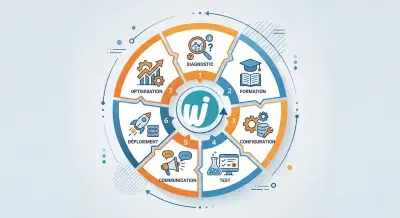
Typical setup process:
- Step 1: Account creation (10 minutes)
- Step 2: Service configuration (30 minutes)
- Step 3: Staff training (1 hour)
- Step 4: Pilot testing with select customers (1 week)
- Result: Operational system within 10 days
Customer Base Objections: "My Customers Aren't Ready"
Many leaders underestimate their customers' adaptability. Virtual queues increase customer satisfaction by 20-30% on average (Capgemini retail digitalization report). Offering a digital alternative addresses a real customer need.
Progressive deployment strategy:
- Week 1-2: Parallel option (traditional queue + QR code)
- Week 3-4: Gentle incentive ("Skip the wait, scan here")
- Month 2-3: Natural migration (70% of customers adopt spontaneously)
Competitive Objections: "My Competitors Don't Do This"
This objection reveals a strategic opportunity. Being first in your local sector to offer virtual queuing creates a temporary competitive advantage. 60% of customers choose one restaurant over another based on perceived wait time (National Restaurant Association).
Differentiating positioning: "The only medical practice in the neighborhood where you don't wait in the waiting room" becomes a powerful sales argument.
12 Practical Answers to Common Objections
1. "The cost is too high for my SMB"
Answer: Compare real costs. A SaaS solution costs $200-400/month. An additional employee costs $2,500/month (including benefits). Virtual queuing partially replaces labor needs.
Action: Calculate your 6-month ROI. Lost customers × average ticket × 6 = avoidable revenue loss.
2. "My older customers won't know how to use the app"
Answer: 78% of seniors own smartphones in developed countries. More importantly: they appreciate avoiding physical waiting. By the way, provide support during the first weeks.
Action: Keep both systems (traditional + digital) temporarily during transition.
3. "I don't have time to train my staff"
Answer: Training takes less time than daily queue management. 1 hour initial training vs 2-3 hours daily saved in queue management. To be honest, it's a time investment that pays off from day one.
Action: Schedule training during slow periods. Most solutions include onboarding support.
4. "What if the system crashes?"
Answer: Professional SaaS solutions guarantee 99.9% uptime. More reliable than your internet connection. If issues arise, temporarily return to manual system.
Action: Check vendor SLA (Service Level Agreement) before signing.
5. "My customers will leave to shop elsewhere"
Answer: It's the opposite. Virtual queuing frees customers for other activities. They return at the scheduled time, more relaxed. Amusement parks that adopted virtual queues report 12-18% increase in on-site spending (IAAPA).
Action: Offer complementary activities (shop, café, additional services) during virtual waiting.
6. "I don't want to depend on external technology"
Answer: You already depend on dozens of technologies: electricity, internet, phone, POS software. One more that improves your service doesn't significantly increase this risk.
Action: Choose a vendor with verifiable references and clear service contract.
7. "It will dehumanize my service"
Answer: Virtual queuing frees human time for consultation and support. Less time managing waits = more time creating customer value.
Action: Reallocate saved time to high-value tasks (consulting, sales, customer follow-up).
8. "My competitor will copy immediately"
Answer: You maintain 6-12 months advantage. Time for them to understand the benefit, evaluate solutions, decide and deploy. Meanwhile, you build customer loyalty on this new service.
Action: Actively communicate this innovation to anchor your pioneer positioning.
9. "SMS notifications will be expensive"
Answer: SMS cost is marginal ($0.05/SMS) compared to cost of a lost customer (average ticket × repurchase rate). A customer retained through better experience generates 10× SMS costs annually.
Action: Include SMS costs in your customer acquisition cost calculation.
10. "I don't understand technology"
Answer: You don't need to be a technician to drive a car. Modern solutions are designed for intuitive use. The interface resembles tools you already know.
Action: Request a free demonstration. Test the interface before deciding.
11. "It will create confusion initially"
Answer: All innovation creates a 2-3 week adaptation period. During this period, you coexist with the old system. Transition happens naturally.
Action: Prepare clear communication: signs, verbal explanations, live demonstrations.
12. "I prefer waiting until technology matures"
Answer: Virtual queue technology has existed for over 10 years. It's mature. Waiting longer means losing customers today to more agile competitors.
Action: Set yourself a decision deadline. Each delayed month = customers lost permanently.
Practical Implementation: From Decision to Deployment
Once objections are addressed, action trumps reflection. Here's the typical deployment plan for an SMB:
Phase 1: Preparation (Week 1)
- Solution selection: Compare 2-3 vendors maximum
- Internal training: 1 hour tool familiarization
- Customer communication: Prepare explanation materials
- Technical test: Verify internet connection quality
Phase 2: Pilot launch (Weeks 2-3)
- Soft deployment: Offer option without forcing it
- Customer support: Help first users
- Adjustments: Configure settings based on observations
- Staff training: Share first experience feedback
Phase 3: Full rollout (Month 2)
- Enhanced communication: Highlight observed benefits
- Optimization: Adjust wait times based on real data
- Customer retention: Use customer data to personalize service
Success indicators:
- Customer adoption rate: 60% target in 8 weeks
- Perceived wait time reduction: 30-50% (Waitiii metric)
- Staff satisfaction: less stress, more efficiency
The key to success lies in change management. Technology alone isn't enough—it must integrate into an overall customer experience improvement approach.
For deeper insights on customer experience optimization, explore our blog filled with practical advice and sector-specific case studies.
Sources
- Forrester Research — 75% of consumers consider wait time the most frustrating part of their customer experience
- Journal of Service Research — Acceptable wait time before frustration is about 2 minutes in retail
- Harvard Business Review — A customer who waits more than 5 minutes without information is 2× more likely to leave
- Adyen study — Long queues cause 10-15% cart abandonment in retail
- Capgemini retail digitalization report — Virtual queues increase customer satisfaction by 20-30% on average
- National Restaurant Association — 60% of customers choose one restaurant over another based on perceived wait time
- IAAPA — Amusement parks that adopted virtual queues report 12-18% increase in on-site spending