

Walk-in Barbershop: Digitizing Without Losing the Vibe
The Context: When Waiting Becomes a Business Blocker
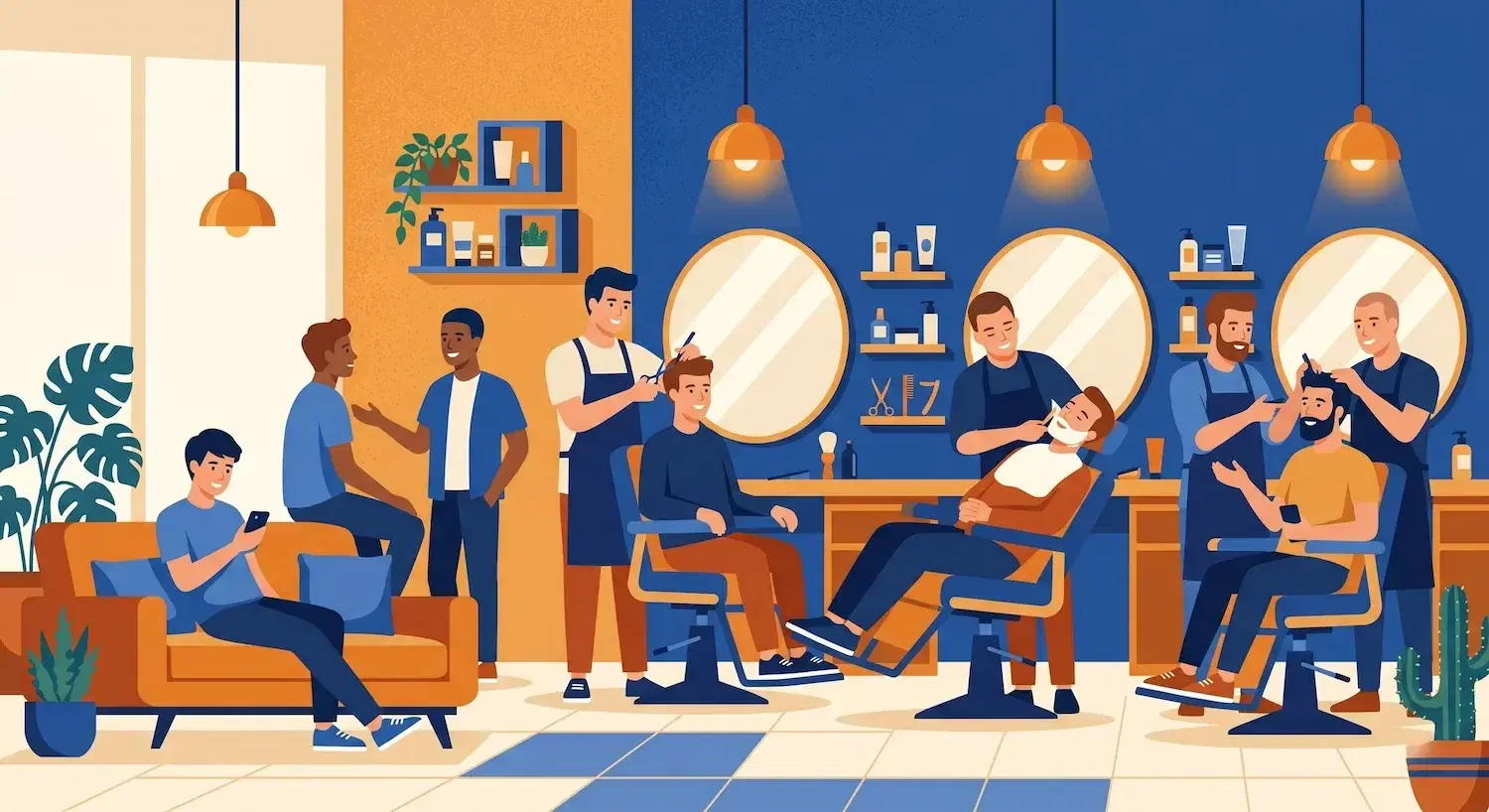
Take The Gentleman's Cut, a neighborhood barbershop that's been serving downtown Seattle for twelve years. Three chairs, two experienced barbers, a loyal clientele that loves the relaxed atmosphere and the ability to walk in without appointments. The walk-in concept is part of the shop's DNA: you push the door, take a seat, chat with other customers while waiting your turn.
The thing is, during peak hours, especially Saturday afternoons, the eight-seat waiting area isn't enough anymore. Customers queue outside. Some leave after five minutes without any information. Others get impatient and create a tense atmosphere. Jake, the owner, notices a 15% drop in foot traffic during the busiest time slots. In fact, poorly managed waiting drives customers away while killing the friendly vibe of the place.
The dilemma is classic: how do you modernize the waiting experience without destroying the authenticity of a traditional barbershop? How do you keep that spontaneous spirit while giving customers the visibility they expect about their wait time?
The Diagnosis: Invisible Waiting Costs Big
The analysis reveals three major pain points. First, uncertainty: customers never know how long they'll wait. As David Maister's research shows, occupied waiting feels roughly 36% shorter than unoccupied waiting. Yet in a crowded barbershop, waiting is rarely constructively occupied.
As it turns out, peak hour management creates problems. Saturday between 2 PM and 5 PM, average wait time climbs to 45 minutes, but nobody knows this upfront. Result: customers leave, tension builds in the waiting area, and the service image deteriorates.
Third, the domino effect on revenue. Jake estimates losing about 12 customers every Saturday, potentially $480 in weekly lost revenue. Over a year, that represents more than $24,000 in losses, solely due to poor wait management.
The thing is, this problem extends far beyond The Gentleman's Cut. In proximity service sectors, unmanaged waiting represents one of the main customer abandonment factors. The tolerance threshold in retail settings sits around 2 minutes before frustration kicks in. A customer waiting more than 5 minutes without information is significantly more likely to leave.
The Implementation: Digitizing Without Compromising
Jake decides to test a virtual queue management solution for three months. The goal: preserve the walk-in spirit while providing wait visibility. Implementation unfolds in four key stages.
Stage 1: Setup and Configuration. A QR code gets displayed at the shop entrance, with simple instructions: "Scan to join the virtual queue and get your estimated wait time." The system is configured to estimate 25 minutes per customer, with a 5-minute safety buffer.
Stage 2: Team Training. Both barbers learn to use the tablet dashboard: calling the next customer, adjusting wait times in real-time, managing no-shows. Quick 30-minute training session. Immediate hands-on practice.
Stage 3: Customer Communication. No revolution, just smooth evolution. A sign explains: "New: Skip the in-store wait with our virtual queue. Prefer waiting here? No problem, that works too!" The message is clear: digitization is an option, not an obligation.
Stage 4: Adaptation Period. For the first three weeks, Jake observes behaviors. About 65% of customers adopt the virtual queue, 35% prefer waiting in-store. No friction: both systems coexist perfectly.
To put it simply, implementation proves easier than expected. Contrary to common myths about queue digitization for small businesses, no technical revolution is needed. Just gradual adaptation that respects what already works.
The Results: Customer Satisfaction Soars
After three months of use, results exceed expectations. First indicator: reduced perceived wait time. Customers using the virtual queue estimate waiting 30 to 50% less, even though objective duration remains identical. Information about wait time completely transforms perception.
Sure enough, time slot optimization makes a real difference. Thanks to dashboard analytics, Jake precisely identifies peak hours and can better advise his clientele. "If you can come around 4 PM instead of 3 PM, you'll wait half as long," he now tells regular customers.
Third benefit: restored freedom. Customers can grab coffee, run errands, or simply stroll around while waiting their turn. Gone is passive waiting in a crowded room. This flexibility is particularly appreciated on Saturdays when downtown is bustling.
That being said, improved atmosphere surprises everyone the most. Paradoxically, digitalizing the wait made the barbershop more welcoming. Fewer people in the waiting area means less tension, more space, more relaxed conversations. The authentic spirit of the place is preserved, even enhanced.
The bottom line: Jake sees a 12% increase in foot traffic during critical time slots. Customers return, bring others, and the shop's reputation improves. Word-of-mouth works: "At Jake's, you don't wait around like an idiot anymore, it's brilliant."
The Lessons: Balancing Tradition and Innovation
This experience reveals several lessons applicable to other proximity businesses. First lesson: digitization isn't disruption. It can integrate harmoniously into a traditional environment, provided you respect existing codes and give customers choice.
In short, information transforms experience. Providing wait visibility radically changes customer perception, even without reducing objective duration. This aligns with research on wait psychology: uncertainty generates more frustration than duration itself.
Third lesson: system coexistence works. Offering a digital alternative without imposing radical change reassures the most reluctant customers. Those who prefer traditional waiting can continue. Those who want to optimize their time adopt the virtual queue.
Fourth point: team impact matters. Barbers appreciate being able to better manage their schedule, anticipate peak flows, and work in a more serene atmosphere. Technology helps them without replacing them.
Sure enough, last observation: return on investment comes quickly. For Jake, the solution pays for itself in two months thanks to recovered customers. A simple but effective ROI calculation.
Digitizing waiting in a walk-in barbershop isn't just a technical question. It's primarily a respectful approach to what exists, improving experience without compromising authenticity. A gentle transformation that reconciles tradition with modernity.
The Broader Impact: Redefining Service Standards
This transformation at The Gentleman's Cut reflects a broader shift in customer service expectations. Today's consumers want spontaneity AND efficiency. They appreciate the authentic barbershop experience but expect modern conveniences like wait transparency.
Moreover, the success of this hybrid approach—maintaining both traditional and digital waiting options—demonstrates that businesses don't need to choose between authenticity and innovation. The key lies in additive digitization: enhancing what works rather than replacing it entirely.
Interestingly, this model could apply to various service businesses: local cafes, auto repair shops, medical clinics, or any establishment where walk-ins are part of the culture. The principle remains the same: respect the existing dynamic while solving genuine customer pain points.
As Jake puts it: "We didn't change who we are. We just made it easier for people to be our customers." That's perhaps the most valuable insight from this case study—successful digitization enhances identity rather than erasing it.
Frequently asked questions
Related articles
Physical vs Digital Queues: 7 Decision-Making Criteria
Objective comparison between physical and digital queuing for local businesses: 7 essential criteria, real costs, and measured ROI.
8 min
Digital Queue Management for SMBs: 6 Myths Debunked
Complete guide to debunk misconceptions about digital queue management for SMBs. Myths vs reality with verified data and practical insights.
8 min
Virtual Queue ROI: Complete Calculation Guide for SMBs
Learn how to calculate virtual queue ROI with a real SMB case study. Complete financial guide with concrete numbers and proven calculation method.
8 min